

More than a boutique hotel, a living heritage
El Progreso: the historical heart of Posada del Molino
History of the Sugar Mills of Todos Santos, BCS
The abundance of water and the fertility of its lands brought prosperity to the Todos Santos oasis, allowing for the cultivation of sugarcane, corn, and a wide variety of vegetables on an industrial scale. By the end of the 19th century, Todos Santos was a major producer of panocha, or piloncillo, exporting tons of this product to the interior of Mexico. The traditional dark brown cones of piloncillo can still be found in many of the local markets of Todos Santos.
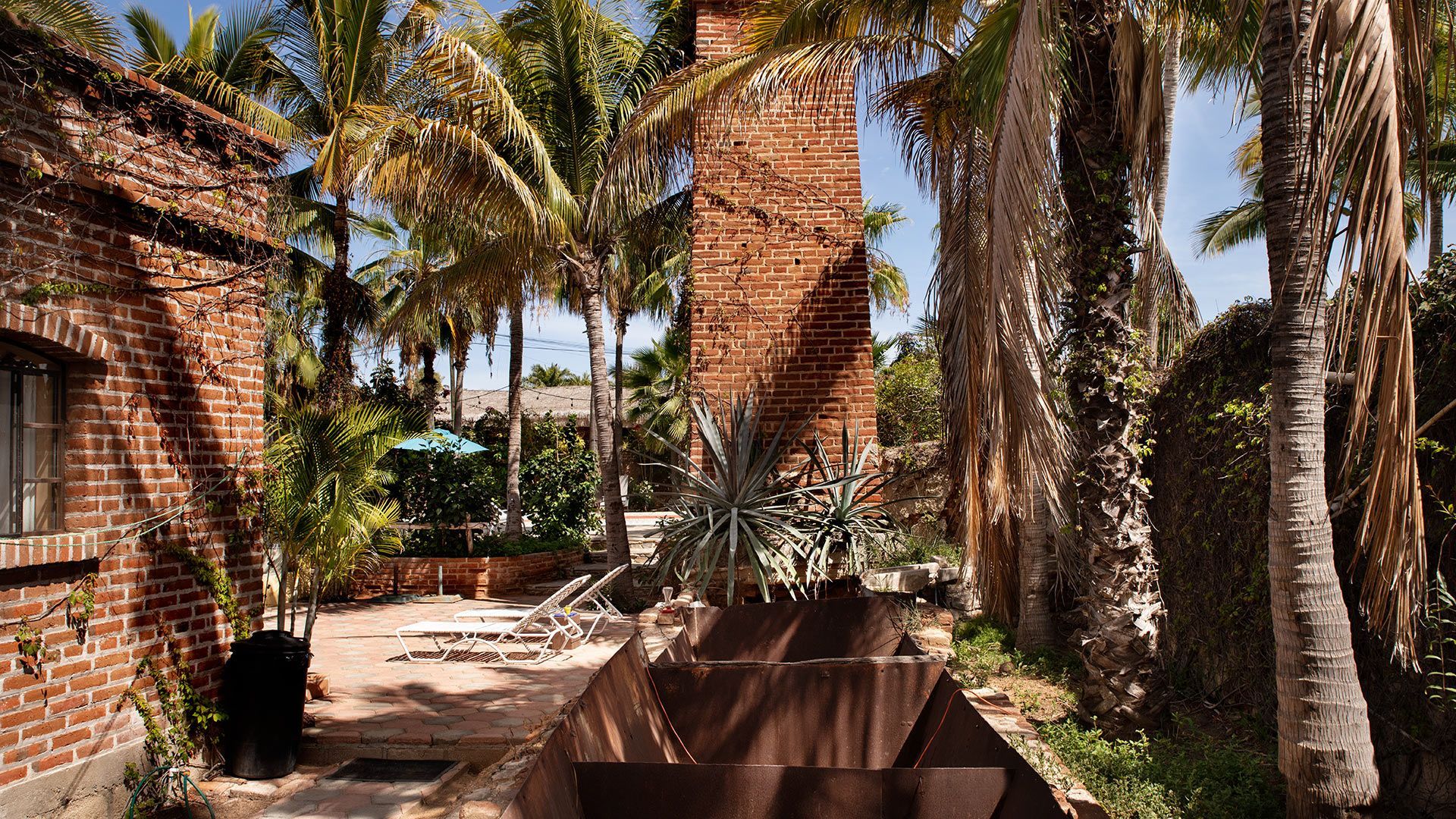
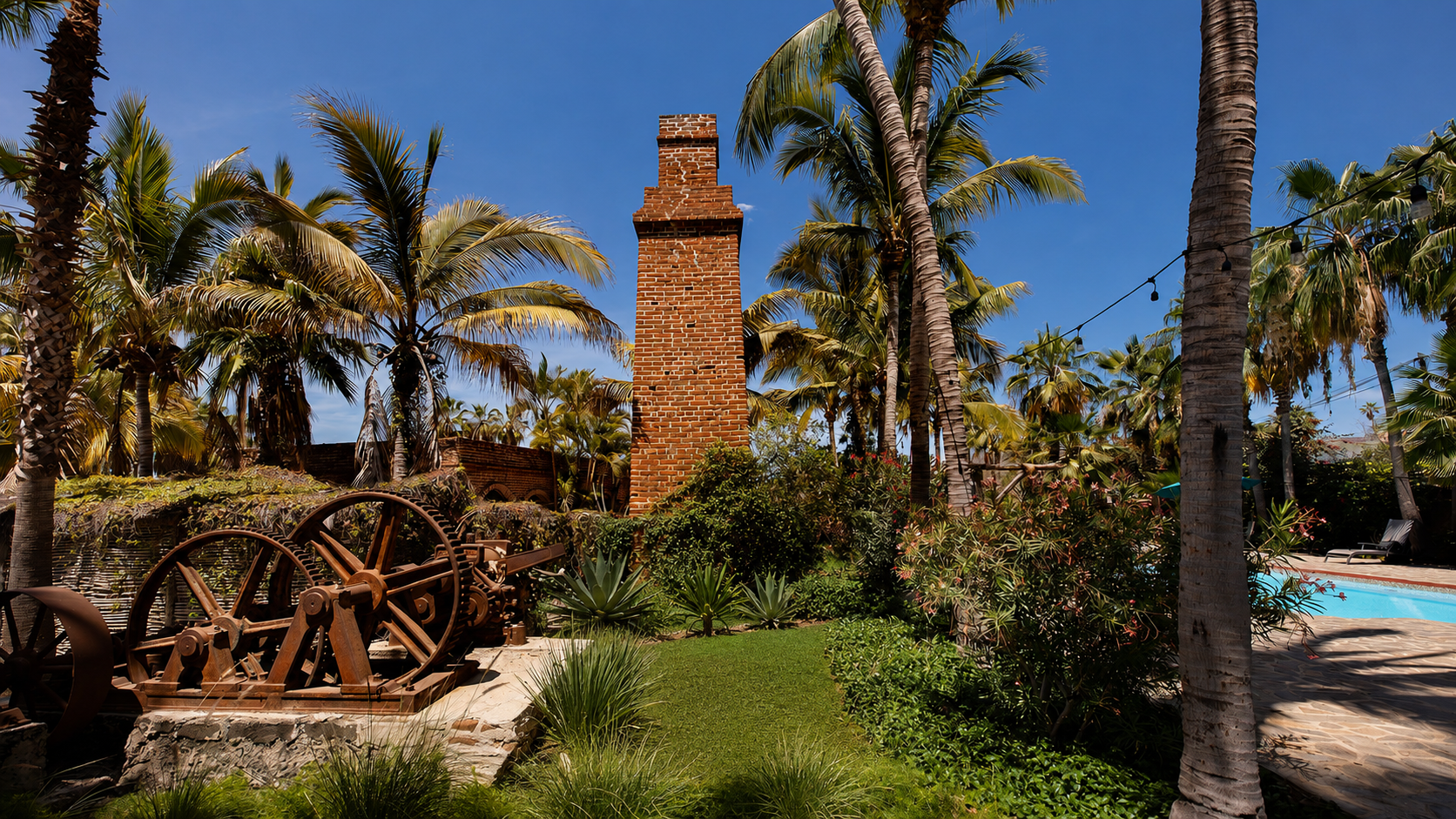
There were five sugarcane mills or processing plants in Todos Santos, as evidenced by the brick chimneys that still stand and are part of the landscape. The industry thrived until the early 1950s, when a severe drought caused the water table to drop, leading to the drying up of the plantations. Don Manuel Salvador Villarino brought the first iron sugarcane mill to the town. The machinery was shipped from San Francisco, unloaded at the port of Cabo San Lucas, and then transported to Todos Santos by "cuadrillas," groups of men who used heavy levers to move it.
The five mills
- San Pablo
This site was the location of the first mill powered by a steam engine. It belonged to the Markerou brothers and was situated on the property of Enrique Max Estrada, in the area now known as La Cachora, currently a well-known residential neighborhood inhabited by many foreigners.
- El Rinconcito
Property of Don Jesús Amador.
- El Cerro Verde
Property of the Dominguez family.
- El Central
Located across from the site where the new hospital was being built on Juárez Street. It was owned by José and Manuel Santana Villarino.
- El Progreso
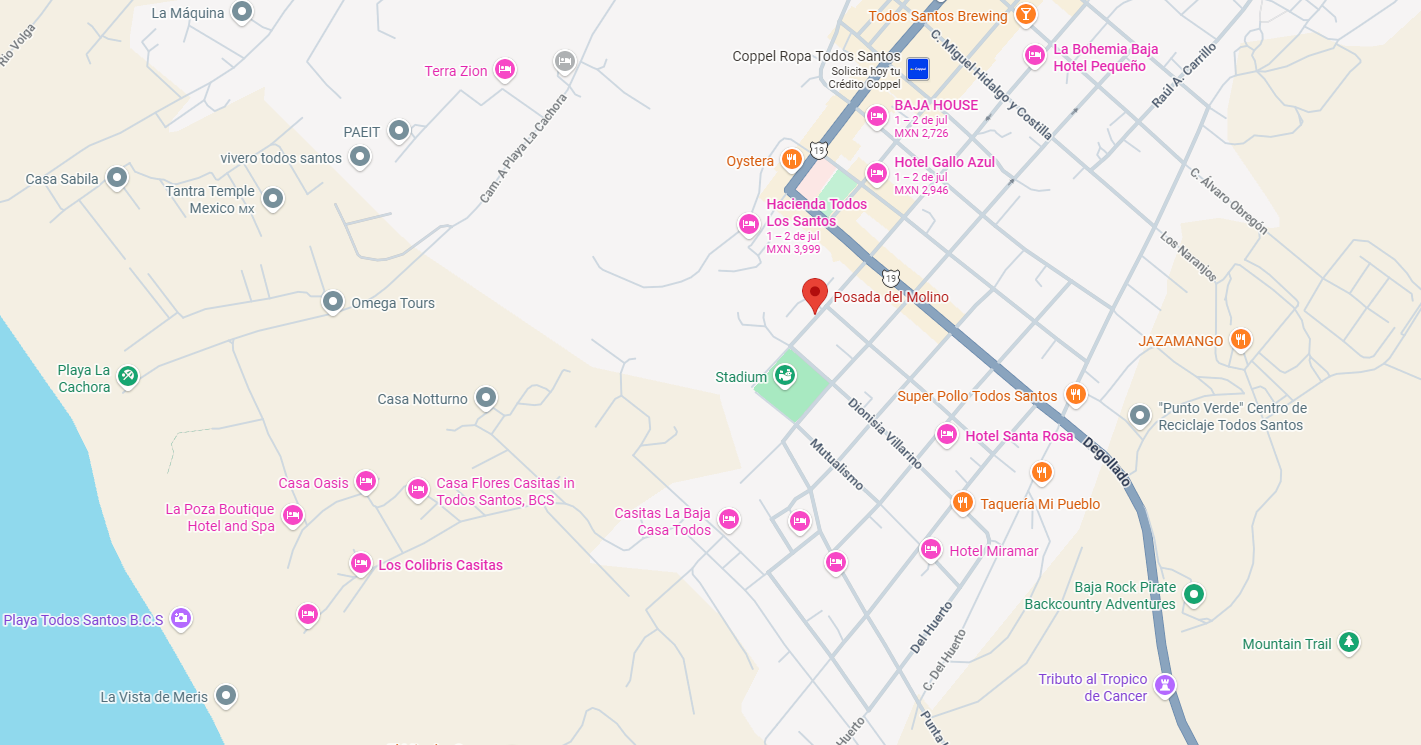
Today known simply as El Molino, the site you are currently visiting.
It was owned by Don Abraham Salgado Villalobos.
During the 1930s, Don Abraham gave his only son, also named Abraham, a trip as a birthday present. The young man set off from Punta Lobos beach in a canoe loaded with piloncillo (unrefined cane sugar) bound for a ship waiting offshore. A strong north wind sank the boat along with its cargo, causing the death of young Abraham, just 15 years old, and his friend known as "El Tiburón" (The Shark).
The El Progreso Mill continued operating until its final closure in 1974, though Don Abraham never recovered from the loss of his son. The chimney, as well as much of the milling machinery and vats used in production, can still be clearly seen. Today, the property houses a residential community and the four-room Posada del Molino hotel.
Posada del Molino traces its roots back to 1984, when Jose and Alicia Corado purchased a large tract of land surrounding the historic sugar mill in what is now known as El Molino Village. Sweethearts since high school in Los Angeles, they decided to leave behind the fast pace of urban life and embrace the beauty and tranquility of Todos Santos, where they would raise their family and create a life inspired by community, nature, and adventure.
In his early years, Jose became known for leading caravans of RV travelers from San Diego along the Baja California peninsula, stopping at his favorite hidden gems before arriving at El Molino. Guests would spend weeks enjoying the magic of Todos Santos before making the journey back north. Many fell so in love with the area that they decided to stay, renting spaces on the property, building palapa-shaded outdoor gathering areas, and eventually creating their own charming casitas.
Over the decades, the original property evolved into the multicultural and welcoming community that is El Molino Village and the Posada del Molino Hotel today. Currently, Posada del Molino offers a unique experience where residents and visitors share beautiful common spaces, including a refreshing pool, a library, and Pura Vida Health Food Store & Healthy Kitchen, founded and operated by Joella, daughter of Joe and Alice.
More than a boutique hotel, Posada del Molino is a reflection of the Corado family's love for Baja California Sur, their adventurous spirit, and their conviction that the most meaningful places are those that bring people together.